



Chestnut Carpenter Ant Queen
Camponotus castaneus (queen)
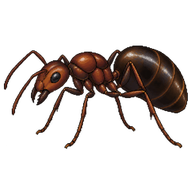
Chestnut carpenter ant queens establish colonies in warm southeastern United States woodlands, selecting protected soil cavities or decaying wood for their first nest chamber. After mating, a queen sheds her wings and initially relies on stored body reserves while raising her first brood rather than foraging. Once workers are present, they feed her sugary liquids and insect protein as she becomes the colony's long-lived egg layer. Her enlarged thorax reflects the powerful flight muscles used during her one-time mating flight.
- Type
- Burrow
- Conservation status
- NE
Growth chain
- ?
- ?
- Chestnut Carpenter Ant
- Chestnut Carpenter Ant Queen
- Chestnut Carpenter Ant Drone