


American Herring Gull Juvenile
Larus smithsonianus (juvenile)
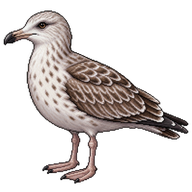
American Herring Gull juveniles frequent beaches, harbors, lakeshores, fields, and landfills after leaving their nesting colonies. Their brown, mottled plumage provides more camouflage than the clean gray-and-white plumage of adults, and they gradually gain stronger flight skills. They forage for fish, insects, carrion, eggs, and discarded food, often following people or other birds to feeding sites. Juveniles take several years to acquire the adult's pale head and gray back.
- Type
- Wing
- Conservation status
- LC
Growth chain
- ?
- American Herring Gull Juvenile
- American Herring Gull