


Long-Winged Conehead
Conocephalus fuscus
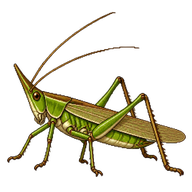
Adults inhabit rough grassland, wet meadows, reedbeds, and dense vegetation beside waterways. They are active hunters of small insects but also feed on grasses, seeds, and other plant matter. Males make a persistent buzzing song by rubbing their forewings together, usually from concealed perches in vegetation. The long wings allow adults to disperse by flight when disturbed or seeking new habitat.
- Type
- Swift
- Conservation status
- NE
Growth chain
- ?
- Long-Winged Conehead